Mental Model
COP-3223H
Table of Contents
- What is computation?
- Desktop Calculator
- One operation at a time
- What about multiple operations?
- Listing operations
- Adding memory
- Multiple memory slots
- Leap to modern computers
- How do we run the program?
- Repetition
- Aside: Repetition in Music Notation
- Example: Exponent
- Branching
- Example: "Exponent" with Branch
- Conditional Branch
- Example: Exponent with Branch
- Input and output
- Recreated a stored program computer
- Language
What is computation?
Desktop Calculator
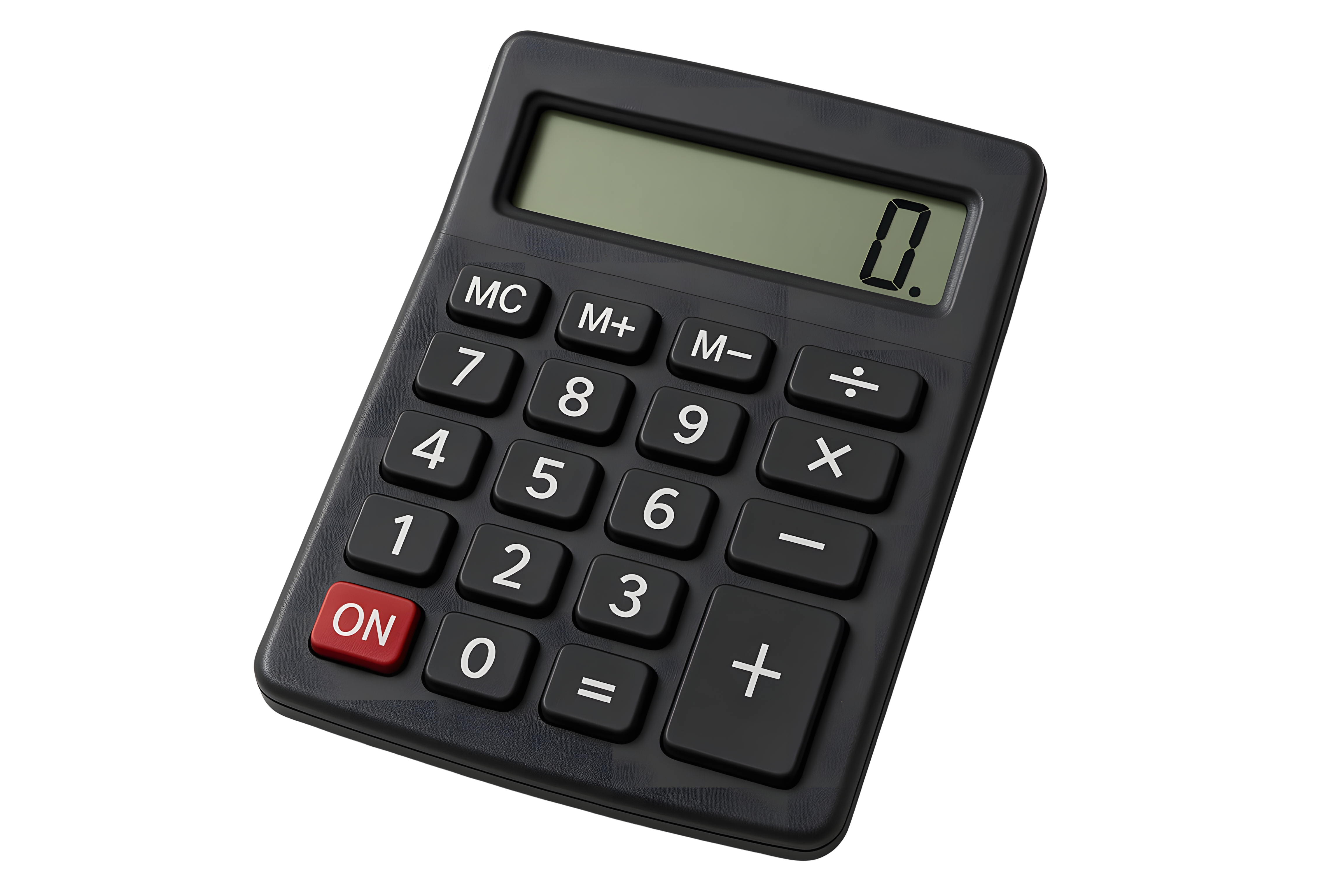
An intuitive starting point is a desktop calculator. You can perform one arithmetic operation at a time.
One operation at a time
Example usage:
- 1 + 1
- 2 * 7
- 9 / 4
What about multiple operations?
Add two multiplications: 2*2 + 3*3
Listing operations
2
*
2
+
3
*
3
=
Adding memory
We can improve ease of use by adding memory.
- store the number, e.g., 2 M+
- then recall twice and multiply, MR * MR
- store 2
- recall
2
store
clear
recall
*
recall
=
Use a calculator with a memory slot (m+, mr)
Use diagram with buttons that can be copied to show how they can be stored in memory slots.
Visually, if we could store the "buttons" (symbols for the buttons) in a list (more memory slots for instructions too), then make a machine that takes the symbols and uses them to press the buttons and automatically retrieve the next instruction, i.e., automate the user of the desktop calculator.
Multiple memory slots
Let's name them to keep track of them.
Imagine multiple memory slots (draw list of boxes)
Store multiple numbers, e.g., let's compute x^2 + y:
5
store x
3
store y

recall x
*
recall x
+
recall y
Leap to modern computers
Imagine we can also store the operations themselves in memory slots too.
Now we have a program.
Draw instructions inside the memory boxes.
Number the instruction memory boxes.
How do we run the program?
Track the next instruction to the run, called the program counter (PC), in memory.
recall pc
+
1
=
store pc
fetch-decode-execute cycle (greatly simplified)
Have a little machine that steps through the program and
- Fetches it from memory
- Execute the instruction
- Increment the program counter
Keep track of the current instruction, let's give it its own memory location, we'll label that location pc for program counter
Then this machine gets the instruction and inputs it to the calculator.
It reads each one then adds one to the program counter.
Now we have a stored program computer.
It can automatically fetch the next instruction.
After running a command we run something like this:
recall pc
+
1
=
store pc
This would need a separate working memory than the program to avoid conflicting with the program's working memory.
Repetition
The program counter is just a memory location, what happens if we store to it?
We can arbitrarily jump to any part of the program
Aside: Repetition in Music Notation
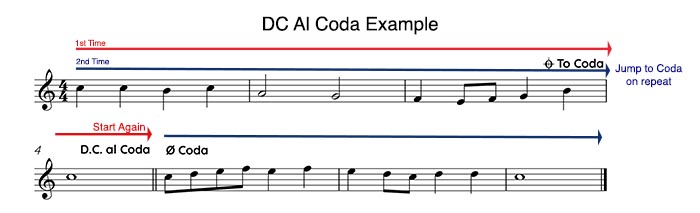
D.C (da capo, from the head) means repeat from the beginning. Al Coda (to the tail) is a branch to the end section.
Example: Exponent
What's a program to compute \(3^5\)?
recall 3
*
recall 3
*
recall 3
*
recall 3
*
recall 3
=
Branching
What if we could use repetition?
Write instructions that change the program counter:
Just store the line number of the program in memory
1
store pc
Let's make a new instruction to do this:
goto 1
Example: "Exponent" with Branch
1: recall 3
2: *
3: goto 1
What does this program do?
If we always repeat, we'll never end.
How can we repeat sometimes but not always?
Conditional Branch
Only run goto when condition is met
1: recall x 2: if x=0 goto 1
What will this program do?
Example: Exponent with Branch
1: 5
2: store e
3: 1
4: store result
----------------
5: recall result
6: *
7: 3
8: =
9: store result
10: recall e
11: -
12: 1
13: =
14: store e
15: if e>0 goto 5
-----------------------
16: recall result
Input and output
On the calculator
- Input: the buttons
- Output: the display
How we represent it
input ameans read a number into memory location aoutputdisplay the most recent number on the display
Example of squaring a given number:
input a
recall a
*
recall a
=
output
Recreated a stored program computer
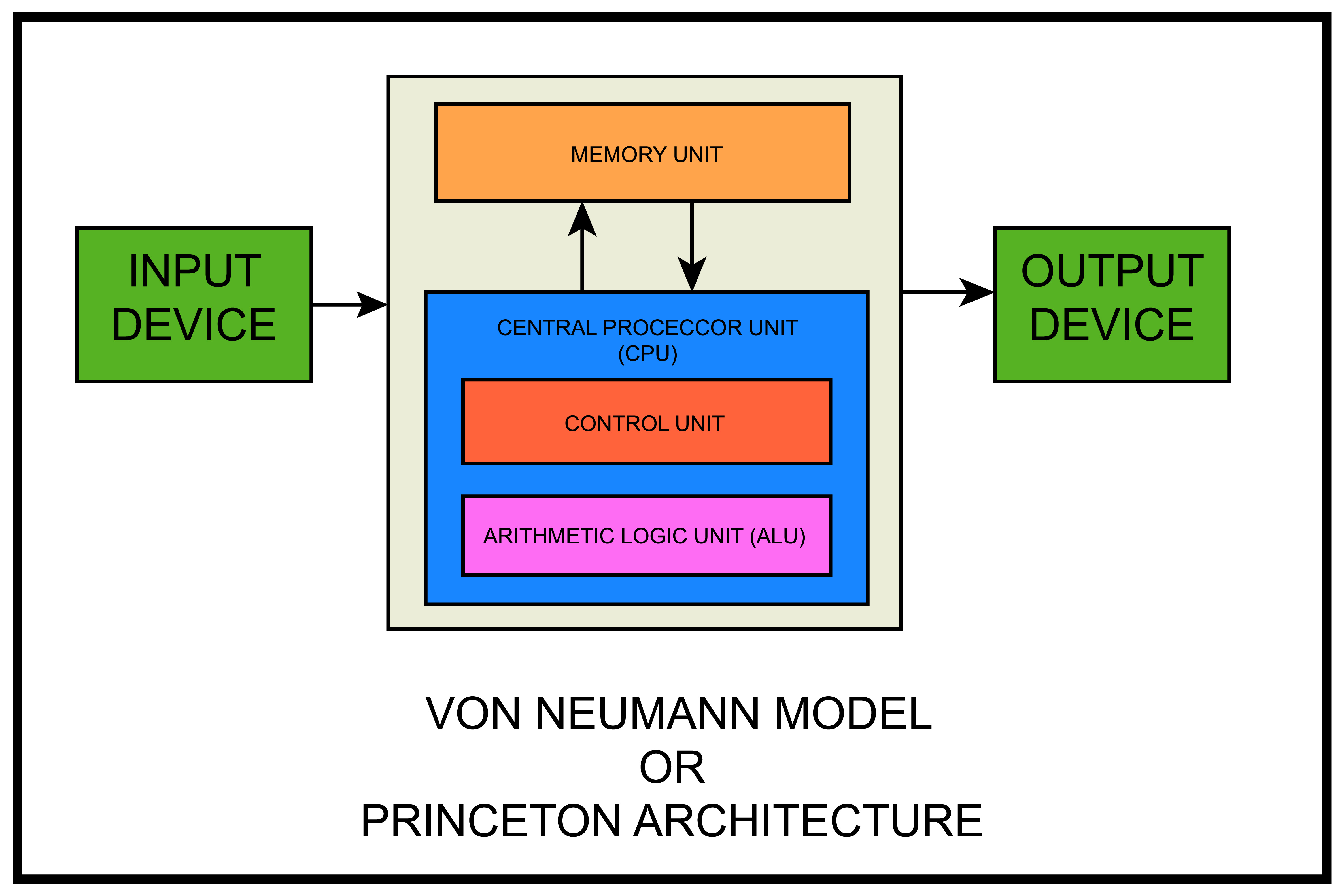
Von Neumann architecture
Desktop calculator with more memory and a program counter that automatically runs the next instruction.
Language
| Digits | 1 2 3 4 5 6 7 8 9 0 |
| Operations | + - * / |
| Memory | store recall |
| Branching | goto ifgoto |
| I/O | input output |