
Games, Training, and Learning
One of the primary research themes in the IS&UE RCE is games, training and learning applications. This theme is heavily influenced by our other research in 3DUIs, pen and multi-touch and motion tracking and estimation. These themes create unique motivating experiences for new type of learning, more effective training, socially acceptable behavior modification and serious games that collaterally teach students as they game.
Serious Games
Minds of Chimera
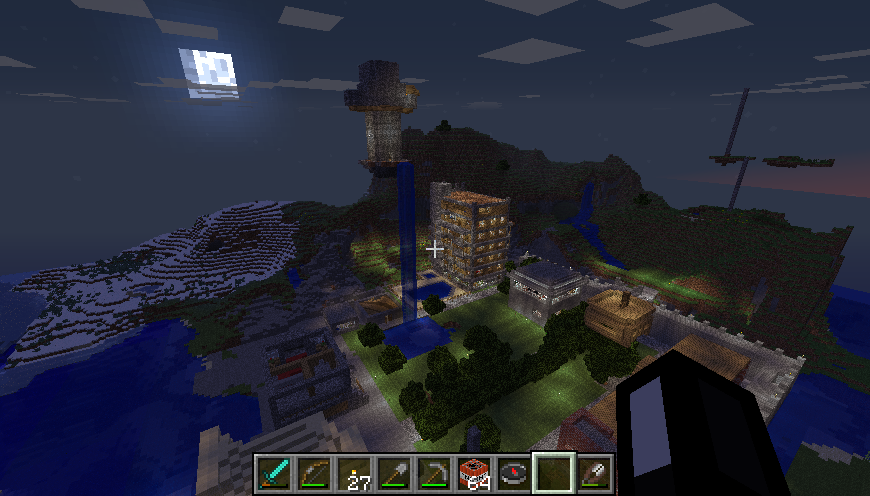
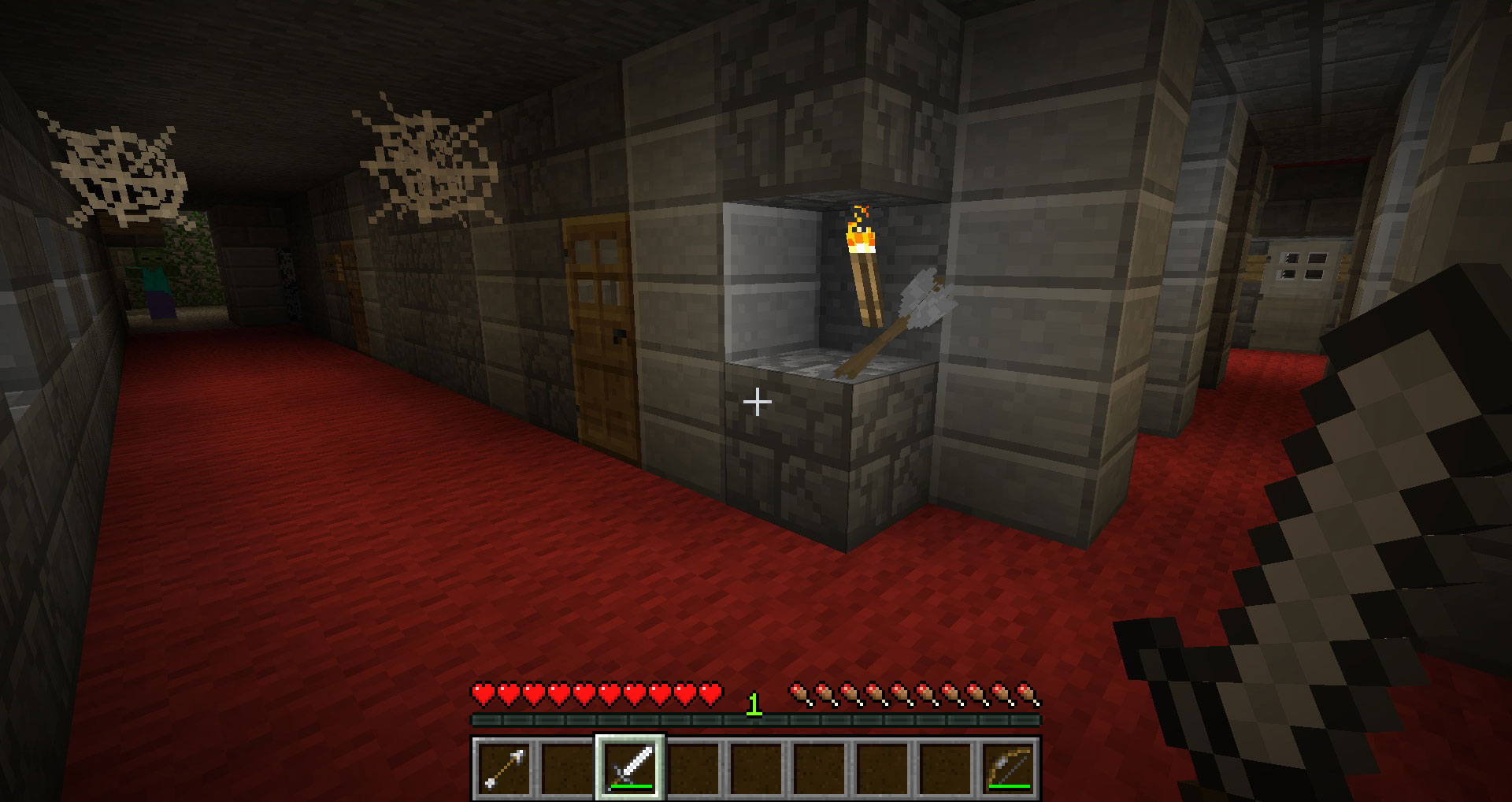
The NSF CreativeIT sponsored Minds of Chimera project is creating more advanced development tools for creativity and authoring; exploring the impact this has on learning in virtual world multiplayer games. Creating a game world where students have multiple ways to interact, create and achieve motivates students to continue to learn in an environment that requires knowledge of STEM education to be successful. By incorporating the development approaches of Concept-Oriented Design, which assists players in breaking their ideas into machine executable instructions, players are able to develop more advanced quests and activities than would be possible in other end-user development platforms. Paired with achievements, advancement and a sense of accomplishment, the online world rewards students and educators that create, overcome and share challenges, as well as allowing the teacher and parent, awareness of the student's educational activities.
This material is based upon work supported by the National Science Foundation under Grant No. NSF-IIS-0856045.
Any opinions, findings and conclusions or recomendations expressed in this material are those of the author(s) and do not necessarily reflect the views of the National Science Foundation (NSF).
Goals
- To teach the students the physics concepts in an enjoyable and effective way
- To encourage creativity by using Concept Oriented Design to create new quests
- To create a common serious game platform to engage content developers so they can create new quests and learning experiences without the need of creating a new game world
- To support other partners in a student's learning such as parents, teachers and peers
Publications
- Zorn, C., Wingrave, C., Charbonneau, E., and LaViola, J. "Exploring Minecraft as a Conduit for Increasing Interest in Programming", Proceedings of the International Conference on the Foundations of Digital Games 2013 (FDG 2013), 352-359, May 2013.
- Wingrave, C., Norton, J., Ross, C., Ochoa, N., Veazanchin, S., Charbonneau, E., and LaViola, J. "Inspiring Creative Constructivist Play", Proceedings of the 2012 ACM Annual Conference on Human Factors in Computing Systems Extended Abstracts (CHI EA 2012), Work-In-Progress, 2339-2344, May 2012.
- Wingrave, C., Norton, J., and LaViola, J. "Using Minecraft for Instruction and Creative Play", CHI 2012 Workshop on Educational Interfaces, Software, and Technology, May 2012.
- Wingrave, C. and LaViola, J. "Reflection on the Design and Implementation of Virtual Environments", PRESENCE: Teleoperators and Virtual Environments, 19(2):179-195, April 2010.
- Wingrave, C., LaViola, J., and Bowman, D. "A Natural, Tiered and Executable UIDL for 3D User Interfaces Based on Concept-Oriented Design", ACM Transactions on Computer-Human Interaction (TOCHI), 16(4):Article 21 (1-36), November 2009.
- Wingrave, C. and Bowman, D. "Tiered Developer-Centric Representations for 3D Interfaces: Concept-Oriented Design in Chasm", Proceedings of IEEE Virtual Reality 2008, 192-200, March 2008.
Sustainable HCI
Plant Guilds
This position paper presents the challenges of designing a software application that aids in the development of a sustainable human system (i.e., an eco-friendly system established with the intent to support some human need) that can support the transition to a simple, sustainable lifestyle. It discusses the challenge of designing an application that achieves a balance of user convenience, awareness, and sustainability in the context of creating a domestic plant guild (i.e., a family of plants that sustains itself and provides for people's essential needs). Based on a field study, the authors present requirements for building a Domestic Plant Guild Composer as one approach for addressing the aforementioned challenge.
Publications
- Tomlinson, B., Patterson, D., Pan, Y., Blevis, B., Nardi, B., Silberman, S., Norton, J., and LaViola, J. "What If Sustainability Doesn't Work Out?", Interactions, 19(6):50-55, November/December 2012.
- Norton, J., Stringfellow, A., and LaViola, J. "Domestic Plant Guilds: A Novel Application for Sustainable HCI", CHI 2012 Workshop on Simple, Sustainable Living, May 2012.
CAT Project
CAT Project (Canine Amusement and Training)

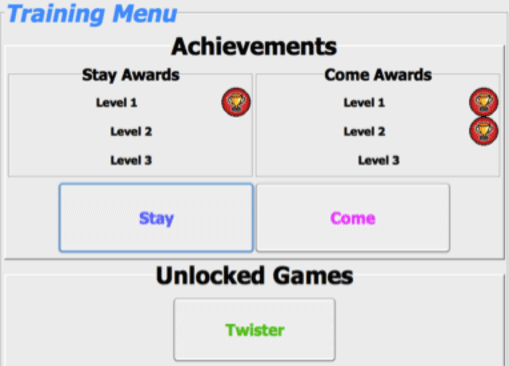
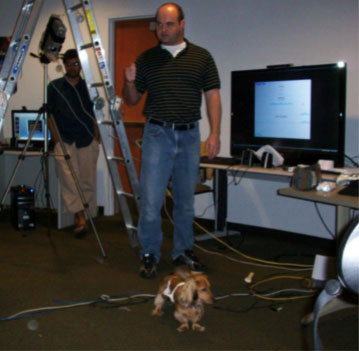
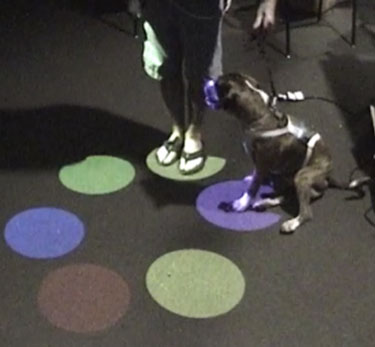
Cross-species computer applications have a history of blended science and humor, despite the real potential for improving the canine-human bond. New activities available to humans in the electronic age can be used to improve this bond. By using a serious games approach, this project motivates the human to spend time with their canine and improve their canine-human bond. This project has iterated on multiple game types and through deep collaboration with a canine behavioralist, has improved the games to so as to be healthy and teach calm interaction. The games also incorporate physiological sensing. The ultimate goal is for a distributable system using commodity hardware that will positively impact the lives of both canines and their owners.
Special thanks to Todd Langston at Pack Life K-9 Behavior Solutions for donating multiple hours of his time to this project.
Publications
- Wingrave, C., Rose, J., Langston, T., and LaViola, J. "Early Explorations of CAT: Canine Amusement and Training", Proceedings of the 28th International Conference Extended Abstracts on Human Factors in Computing Systems (CHI EA 2010), 2661-2669, April 2010.
Mood Sensing
Mood Assessment
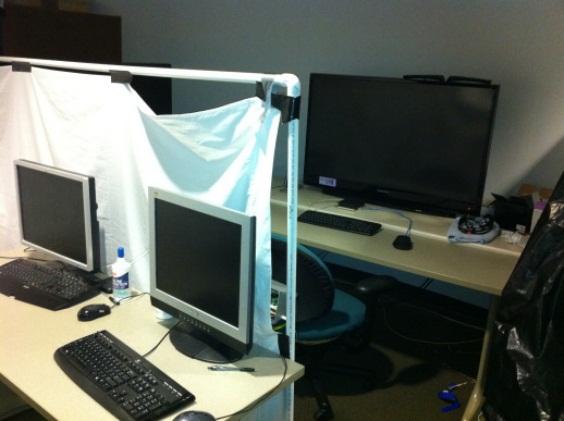
Many tasks are conducted under time and performance constraints, but the mood-congruency of real situations rarely translate to training environments. The ability to perceive affect (emotion and mood states) is essential in understanding how the trainee is reacting to the scenario. This affective data can be used to modify the challenge and flow of scenario or the amount/frequency of support/direction provided to the trainee. This project is concerned with using commodity devices (e.g. Emotiv) to identify mood (a state lasting from several minutes up to several hours) in order to help improve training and intelligent tutoring systems.
This project is funded by Army RDECOM.
Publications
- Wingrave, C., Hoffman, M., Sottilare, R., and LaViola, J. "Unobtrusive Mood Assessment for Training Applications", CHI 2011 Workshop on Brain and Body Interfaces: Designing for Meaningful Interaction, May 2011.